 “We’re finally here!” my friend exclaimed. We were just arriving at the Susquehanna River. No longer did we have to wait for our day of relaxation. The beauty and serenity of nature was all around. We parked our car at a spot near our favorite trail that leads up along the edge of the mighty Susky.
As we started up the trail, our senses started to tingle. The essence of pine, the sight of the blooming Trillium, and the cool, yet damp, spring breeze from the river enlightened us and soothed our minds. The river was humming and crackling as it moved around and over the rocks. Eagles chattered, osprey fished, the song birds sang a melodious tune, and leaves danced around in the tree tops; natures own harmony.
“Hi, how are you? Catch any?” I said to a fisherman as we passed by.
“Nope, but I cleaned up some of this junk” he said, as he reached down and pulled some old fishing line out from under his feet. “It takes it away, you know,” he said sadly.
We walked up the trail around another bend and stopped where we could get a better view out over the river. That’s when I understood what the fisherman was trying to say. I felt just as he did, I’m sure. First it was a can, then bottles, little pieces of fishing lure, wrappers, and cigarette butts. A half-eaten sandwich covered in ants sat on a rock where we would usually sit. Fishing line was strung around rocks and tree branches like streamers at a party, but this was no party. It did take it away for that moment. The beauty that surrounded us was erased by the sight of litter.
Litter is not only unsightly, but has devastating effects on wildlife. The great outdoors is my home away from home, I spend time here every day. Each day I see it, the cigarette butts pepper the landscape, the shiny can that peeks it nose up from the edge of the road, and all the other unwanteds that are casually misplaced outdoors. Litter happens on a daily basis around here and is picked up as we see it along the roads, trails, and shorelines. Unsightly? Yes, but the impact it has on wildlife is great.
One day, while I was driving through Susquehanna State Park, I noticed a woman pointing up into a tree.
“In the tree, in the tree,” the woman cried.
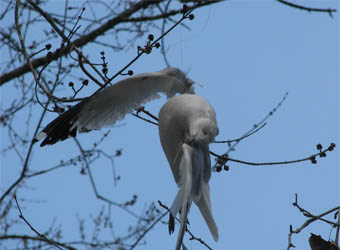
I looked down the road and up into a sycamore tree. A kite, I thought, suspended from a branch by its string, twisting and dangling, dancing in the breeze. No, it was not a kite, but a seagull trapped. The gull had been entangled in discarded fishing line, which got caught on a branch as it flew by the tree. It was too late. Exhausted from the stress from the entrapment the gull soon died. I’ve also witnessed dead fish and other animals entangled in plastic six-pack rings. They get caught and as they grow the plastic does not, it cuts through them with no remorse, leaving them to ultimately die in agony.
The Maryland park system is a “Trash Free Park System,” which means there are no trash receptacles in the parks, “Trash Free” bags are supplied and are readily available throughout the park. There are monofilament line recycling stations within the park as well. No trash cans in the parks keep the user experience to a maximum level. Overflowing trash cans, animals dependant on human food, and bees, among other things are of days gone. If you can pack it in, then you can pack it out. I don’t know why some people think it’s OK to litter. We can take the time to go to the store each day to purchase goods and yet some of us are too lazy to take the time to dispose of the trash properly. Maybe it’s selfishness, lack of knowledge or the “it’s not litter because someone else will pick it up, they always do” mentality. Think about it: the gum on the bottom of your shoe tracked across the carpet, the array of cigarette butts staring at you while you eat lunch on the patio of your favorite restaurant, the fish in agony unable to release itself from manmade torture.
It’s the little things, the overlooked things we take for granted that have the most impact, emotionally and physically on humans and wildlife alike. We need to take accountability for our actions and reduce our personal environmental footprint. With education and the adherence to the “Leave no Trace Ethics” we can accomplish this goal to salvage natures own beauty and keep wildlife free from man’s torture, litter.